Historical Archives
-
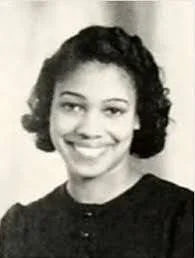
Mildred Bright Payton
Mildred Bright Payton was born on May 7, 1918 in Rutherfordton, Rutherford County, North Carolina and died on January 9, 2000 in Greensboro, Guilford County, North Carolina. She was married to a man named Earl Payton. She began her career in Franklin County, which occurred after she graduated from North Carolina Agricultural and Technical University. She then became a USDA Home Agent in Chatham County, North Carolina. She and other farmers bought land and created the Chatham County Colored Fair, which later on became the Chatham County Fair. She went back to school after her daughter Marjorie graduated from college. Mildred Bright Payton graduated with honors from the North Carolina Central University School of Law. She left the United States to join the peace corps in Turkey in the 1960s.
-
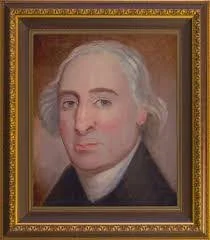
William Hooper
William Hooper was born on June 17, 1742, in Boston, Massachusetts. He died on October 14, 1790, in Hillsborough, North Carolina. When William Hooper was seven years old he attended The Boston Latin School. After that he took a sophomore class at Harvard College in 1757 – at the age of 16 – and ended up graduating in 1760 with a Bachelor’s degree and in 1763 with a Master’s degree. He was one of three men chosen by the state’s First Provincial Congress to sign the Declaration of Independence. In Harvard, Hooper ranked eighth in a class of twenty-seven students. William Hooper’s wife was Anne Clark (1744-1795), and three children named William, Elizabeth (Betsy), and Thomas.
-
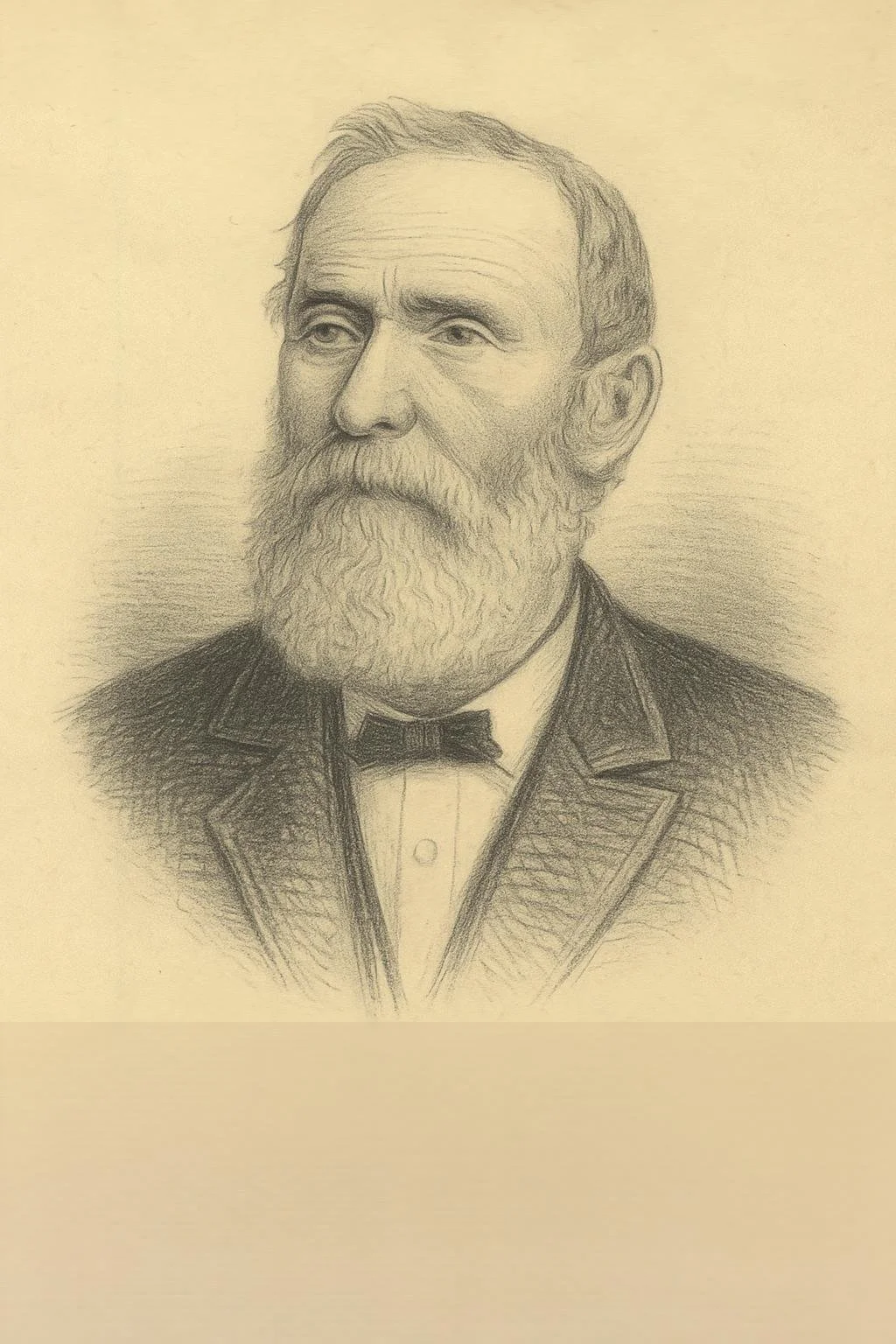
Samuel Siler
Samuel Siler was born on August 25, 1819 in Chatham County, North Carolina, and died in the same county in 1900. He was the son of Weimer and Margaret Siler and the grandson of Philip and Mary Siler. He married Sarah Sallie Woods around 1833. Together they had a large family with several kids including Louisa Margaret, Crabtree, Elizabeth Emily, Julia A., Samuel, Jr., Mary E., R. Cicero, Sarah Martha, & Cincinnatus Siler. Samuel Siler facilitated the railroad's arrival in Chatham County, North Carolina. He then donated the land for Siler Station in 1884. The railroad was significant at the time, serving as a key connection between the area and the rest of the state. The remnants of the railroad are all over, some of it even submerged under Jordan Lake. His legacy remains important in Chatham County history.
-
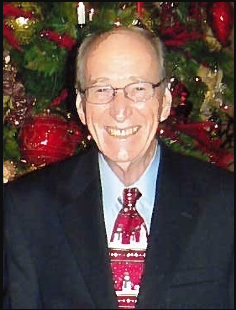
Perry W. Harrison
Perry W. Harrison, the late Superintendent of Chatham County Schools, was born on December 3, 1931 in Forsyth County and passed away on November 19, 2015, at the age of 83. He was survived by his wife Sue Harrison, son Perry Harrison Jr., step-children Damon Coe & Jennifer McLaurin, two daughters Julie Allen & Susan Parks and seven grandchildren. Harrison worked in the Chatham County school system for twenty-six years as a superintendent. Perry Harrison Elementary School in Pittsboro, North Carolina was named in his honor. In his obituaries guest book he was described as “always so kind and genuine,” and about his professional work, they said “his vision, leadership style, and genuine love for the people of Chatham County helped to create an educated citizenry that has continued to inspire Chatham County to be the great place it is.” Through his leadership and compassion, Perry W. Harrison left a lasting legacy that continues to influence education in Chatham County.
-
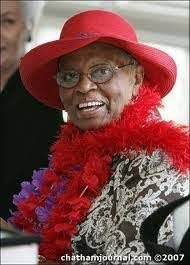
Margaret B. Pollard
Margaret B. Pollard was a trailblazing public servant in Chatham County, North Carolina, becoming the first African American woman to serve as chair of the Chatham County Board of Commissioners. She was a respected educator, health professional, and activist for human relations and environmental sustainability. She was born on May 3, 1932 in Moncure, North Carolina, and passed away in 2009 in Oakland Township, North Carolina. She was Valedictorian of Horton High School, earned a Bachelor's in biology and a Master’s in public health. She fought for human relations, environmental well-being, and smart energy choices. She was known for being respectful to everyone, regardless of background or political affiliation, and for her commitment to education, community, and sustainability.
-
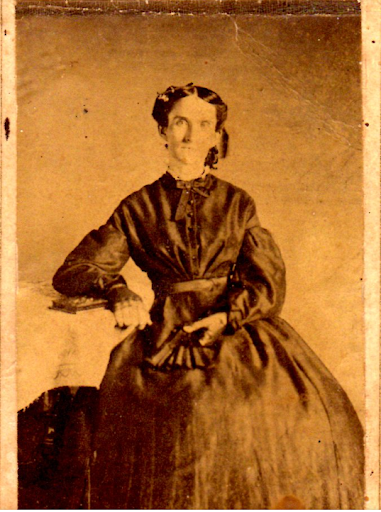
Lucy Worth Jackson
Lucy Worth Jackson was born in 1828 in Chatham County, NC, and died in 1909, in Pittsboro, NC. Jackson’s hometown was Pittsboro where she was a community leader and artist. Lucy fundraised for community projects in Chatham County. She assisted in many local projects such as fundraising money for a new clock for the courthouse. Money from these fundraisers would also go towards schools within the county. She won multiple awards at the state fair for her paintings known as “Lady’s Work,” some of which were moss paintings. Lucy Worth Jackson also used her status within the community to lead local improvement movements. Her father was Jonathan Worth, who later became the Governor of North Carolina, and her mother was Martitia Daniel Worth. She married John Jackson and they had 5 children. Lucy also has a great-great-grandaughter, Sallie Sypher, who gave information to the Chatham Historical Association about her great-great-grandmother.
-
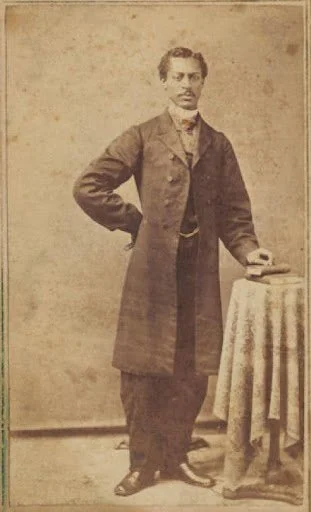
Lewis Freeman
Lewis Freeman was a prominent, free African American who owned significant land in downtown Pittsboro, North Carolina before the Civil war, establishing himself as a successful real estate investor and merchant. Freeman was Pittsboro's first recorded and most prosperous free black settler, having been in town by 1810. He acquired numerous parcels of land in the heart of downtown Pittsboro, including on Salisbury street; and owned 20 additional acres in the country. Despite North Carolina laws restricting black land ownership, Freeman's success allowed him to buy land, build his own home, and free his family members, with white businessmen sometimes acting on his behalf. Lewis Freeman Historic Park in Pittsboro honors his contributions to the town's early economic development. In his will, Freeman left his home and land to his wife, Creecy. His legacy extended through his grandson, Robert Tanner Freeman, who was the first African American to graduate from dental school. He was also survived by a great-great-great grandson, Robert C. Weaver, who was the first African American United States cabinet secretary.
-
Herman Husband
Herman Husband was born December 3, 1724, in Cecil County, Maryland, and died on June 19, 1795, in a tavern outside Philadelphia, Pennsylvania. Herman was a successful farmer and an influential leader during the Regulation Rebellion in pre-Revolutionary North Carolina. In 1754 Herman Husband visited Orange County, North Carolina, and was greatly impressed. The Piedmont offered an environment conducive to farming, so Husband settled in the Sandy Creek region of Orange County in 1762. Herman Husband recognized the injustices that his new farming neighbors suffered from the local officials. Husband’s perspective was that wealthy landowners exploited workers, and farming families struggled to acquire land. In 1776, he co-organized the Sandy Creek Association and emerged as its chief spokesperson. The movement failed after two years, yet allowed farmers the opportunity to be heard. In 1768, Piedmont farmers reorganized as the “Regulators,” and Husband served as their spokesman, political thinker, and negotiator. He did so because he understood the farmers’ plight and articulated their demands. He lived outside Pittsburgh, Pennsylvania, until his death in June 1795.
-
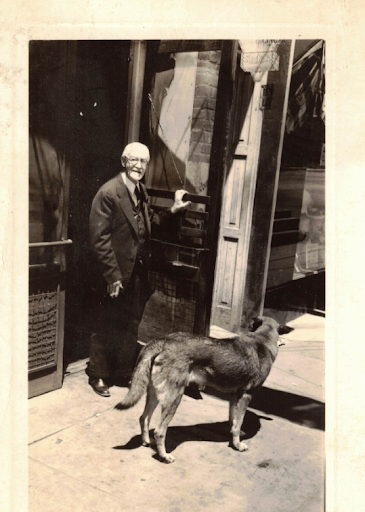
George R. Pilkington
George R. Pilkington was born in Haslingden, England, in 1866 and died in May, 1944. Pilkington was best known for his successful pharmacy and soda shop. He lost his parents at a young age, and his grandparents assumed custody of him. As he got older he apprenticed with a druggist and then received further training from London College of Pharmacy. He practiced working as a pharmacist in London, Douglas, and Liverpool before relocating to Chatham County. He originally moved to Chatham County with William & Thomas Calvert with the intention of working in agriculture. After his attempts in farming were unsuccessful he went back to working as a pharmacist. He founded the first drug store in Pittsboro. His drug store provided all of the standard pharmaceuticals at the time and household items. Pilkington’s became a gathering place for Pittsboro. He married Eleanor “Ellen” Anna Eubanks and they had three daughters together.
-
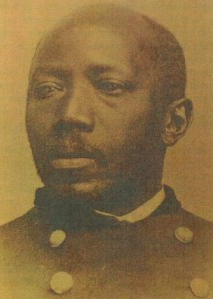
George Moses Horton
George Moses Horton was born in 1798 in Northampton County, North Carolina. He passed away in 1884 at the age of 86, the place is unknown. He was an African American poet who wrote while he was still enslaved, which is something he was and is still respected for. George was born into slavery and was released by Union troops in 1865 at the end of the Civil War. He received his education at the University of North Carolina in Chapel Hill. At UNC-Chapel Hill he was encouraged to pursue poetry and published his first book in 1829. He was the first black author in the south to have become published, and the only American to publish a book while enslaved. He published other works after joining the Union Army. He moved to Philadelphia after the Civil War and continued writing and was declared the “Historic Poet Laureate" of Chatham County in 1997. A historical marker was placed near his home in 1999, the first placed for an African American in North Carolina. George had a wife named Martha Snipes who at one point was enslaved by Franklin Snipes. He also had two children; his son’s name was Free, while his daughter’s was Rhody, they both carried their mother’s last name.
-
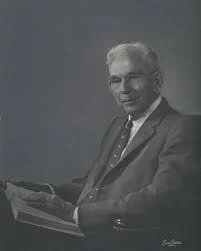
Clarence Hamilton Poe
Clarence Hamilton Poe was born on January 10, 1881, near the Gulf in Chatham County, North Carolina. He died on October 8, 1964, in Raleigh, North Carolina. Over the course of his long tenure at The Progressive Farmer, Clarence Hamilton Poe became one of the most influential opinion-molders in the modern South. He was never educated beyond grade school; however, Clarence Hamilton Poe was eventually the recipient of five honorary doctorates. At the age of sixteen, he became a writer and office boy for the Raleigh-based magazine founded by L.L. Polk. Two years later he became the editor and, in 1903, with his purchase of it for $7,500, the publisher. Over the next several decades the journal became the preeminent agricultural publication in the South, merging with fourteen other titles. In recent years The Progressive Farmer and its sister publication Southern Living were sold to Time Inc. for $480 million.
Through his speeches, books, and editorials, Poe promoted numerous Progressive initiatives. He counted as his chief agricultural contribution his promotion of “two-armed farming,” the idea that farmers should diversify into both crops and livestock. Poe crusaded for better rural education and cooperative marketing. Outside the agriculture realm he was a proponent of prohibition and, late in life, an opponent of the Speaker Ban legislation. Poe vigorously opposed lynching. His article in 1904 in The Atlantic drew the attention of President Theodore Roosevelt.
-
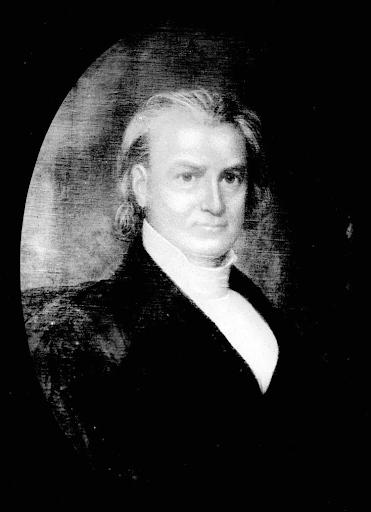
Charles Manly
Charles Manly was born on May 13, 1795 in Chatham County, North Carolina and died May 1, 1871 in Raleigh, North Carolina. He attended the Pittsboro Academy and later the University of North Carolina. In 1817 he married Charity Hare Haywood, the daughter of William Henry Haywood, Sr., of Raleigh; she was the sister of U.S. Senator William Henry Haywood, Jr., and of the wife of Governor Edward B. Dudley.The Manly’s had six daughters and five sons. While attending UNC he studied law and passed the Bar Exam in 1815. He first entered politics in 1823 serving on the Washington, DC Commissions that negotiated claims under the Treaty of Ghent. He served as Clerk of NC House of Commissions from 1831-1841 and then from 1844 to 1847. He also was the Secretary and Treasurer of The University of North Carolina Board of Trustees from 1821 to 1849. Charles was elected governor by popular vote in the 1848 General Election. During his term, he showed great interest in internal improvements, recommended that a geological survey be undertaken, and encouraged the collection of colonial-era documents on North Carolina from London.
-
Carl Thompson
Carl Thompson formally kicked off his campaign for the District 5 commissioner seat against incumbent Tommy Emerson with a rally attended by over 100 supporters. He was the first African American elected to a country office since Reconstruction in 1978. When he began his first term as a country commissioner, he served until 1990. Thompson is a basic education instructor at Center Carolina Community College and pastor of the World of Life Christian Outreach Center in Liberty. He and his wife, Mechelle, have three children; Carla, age 23, Karen age 20 and Carl Jr. age 17, at Chatham High School. During his twelve years as a county commissioner Thompson served as both Chair and Vice-Chair. He was instrumental in the county’s establishing building inspection and recreation departments, an economic development commission, the county’s first water system, a land use plan and the community college campus in Pittsboro. While serving as a commissioner he was awarded a National Rural Fellowship to attend the University of Massachusetts, where he received a master’s degree in regional planning.
-